Evolving the Koalafi shopping experience
Snapshot
Role: Senior Product Designer
Product: Koalafi mobile app (iOS and Android)
Scope: Product strategy, UX/UI design, marketplace discovery, mobile mapping, design systems and product optimisation.
Following the launch of Koalafi’s first mobile app, I led design work to evolve the customer experience beyond core lease servicing. This included improving how customers discovered retailers, explored participating stores and accessed online shopping, while introducing reusable patterns that could support the growing retail network.
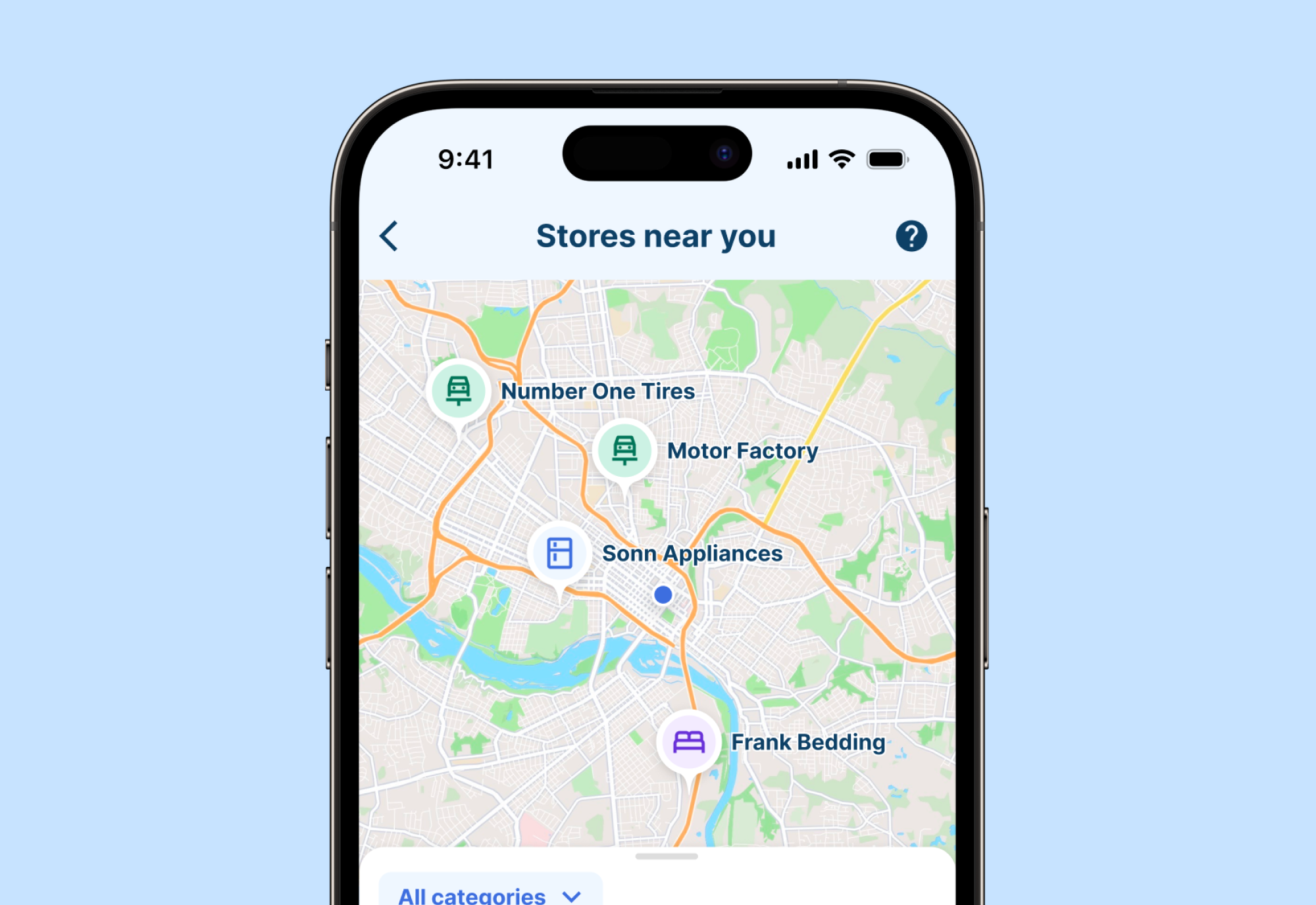
The work also involved design and technical discovery around bringing the existing store locator into the native apps, contributing to the decision to adopt Mapbox for iOS and Android.
Context & Problem
The initial mobile app gave customers a dedicated place to manage their Koalafi leases, but the Shop experience was deliberately limited for the MVP. Customers could access Shop through a link to the existing web experience, rather than a fully integrated mobile marketplace.
Once the core app was established, there was an opportunity to make Shop feel like a more natural part of the mobile experience. Customers needed a clearer way to discover participating retailers, find physical store locations and understand how to shop online or in-store using Koalafi.
The existing website also included a store locator powered by MetaLocator. Bringing this capability into the native apps presented an opportunity to reconsider both the experience and the underlying technology, rather than simply reproducing the existing web implementation.
My Role & Team
As Lead Product Designer, I owned the design of the Shop improvements and contributed to the ongoing evolution of the wider mobile app.
I worked closely with Product and Engineering to shape the experience, explore technical requirements and take initiatives from early discovery through to design delivery.
The core delivery team included a Product Manager, Engineering Manager, Senior Product Designer (me), four engineers and three QA testers. I also worked closely with Legal, Data and Marketing.
My responsibilities included:
Defining and shaping improvements to the Shop experience.
Designing retailer discovery and store-location journeys.
Contributing to design and technical discovery for the mobile mapping solution.
Developing a reusable retailer identity system.
Designing online shopping guidance and supporting interactions.
Identifying opportunities to improve repeat shopping and customer communications.
Strategic Decisions
1. Make Shop feel like part of the app
The initial MVP had intentionally prioritised core lease servicing, with Shop accessed through an external link to the existing web experience.
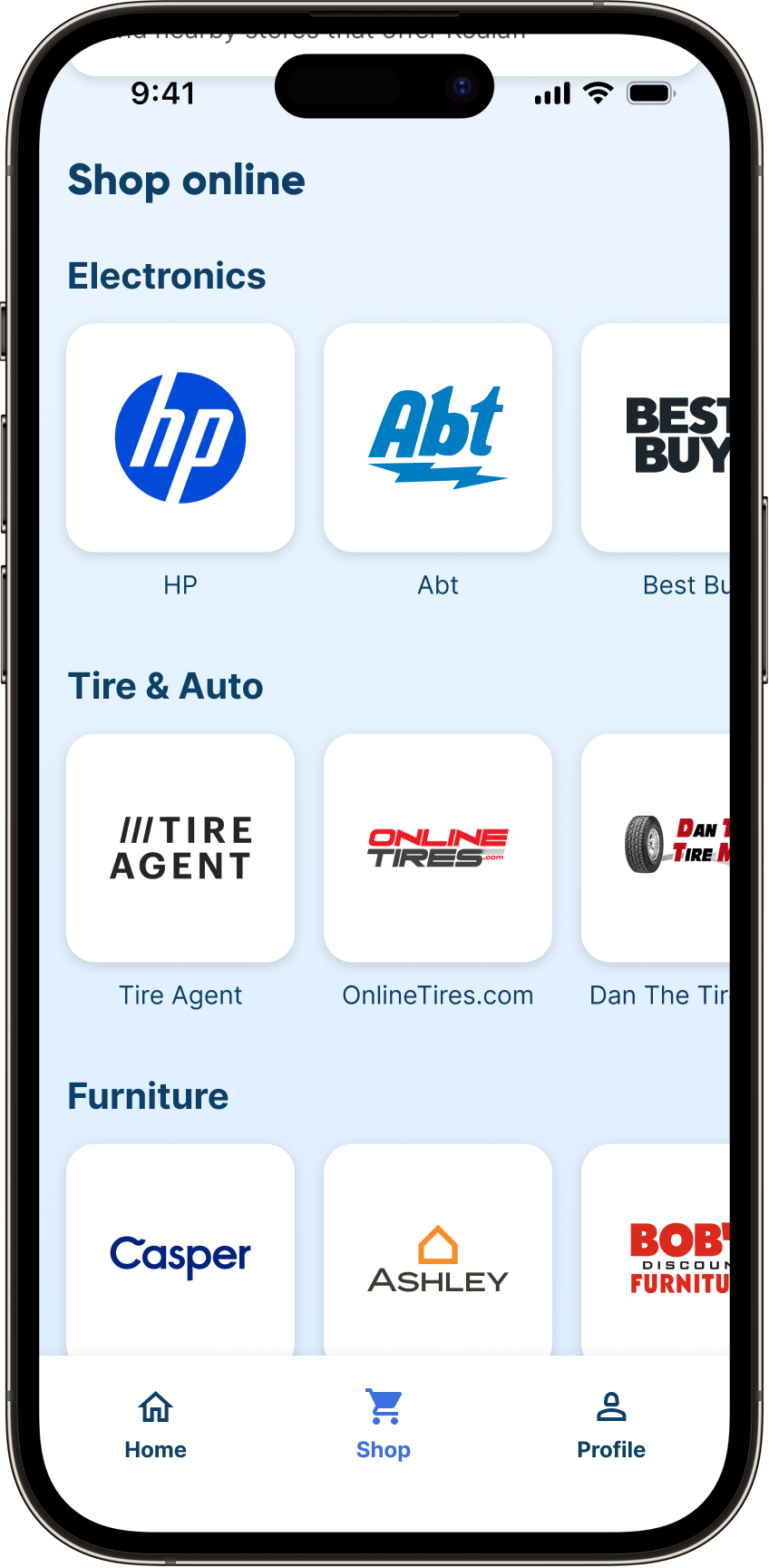
The next phase was an opportunity to bring the shopping journey closer to the native app experience. Rather than treating Shop as a simple link-out destination, I focused on improving how customers discovered retailers and accessed the information they needed.
This included a more considered Shop experience, clearer retailer presentation and better access to shopping guidance.
2. Establish a scalable retailer identity system
A consistent retailer experience needed to work across the Shop experience, store listings and map markers.
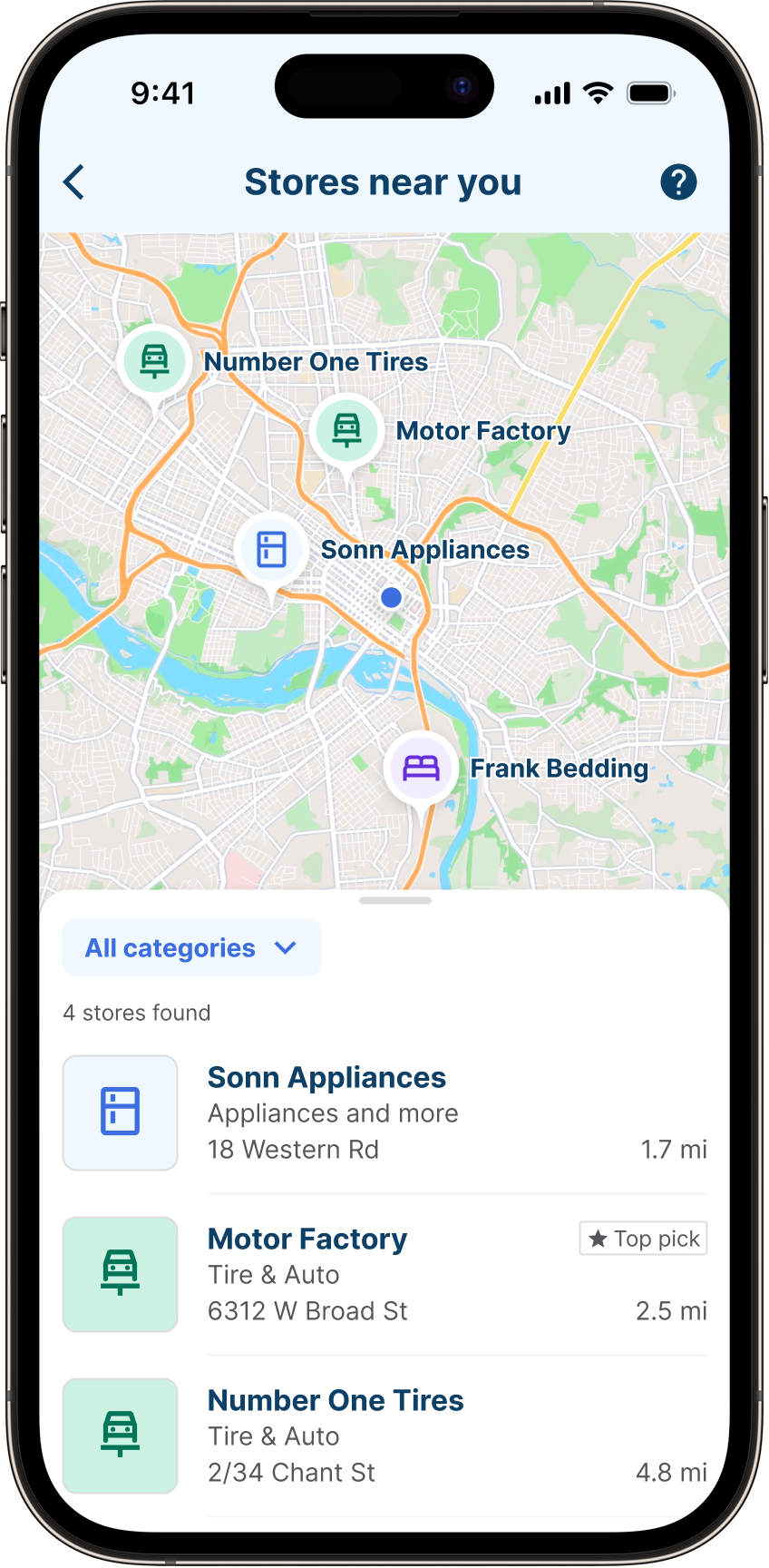
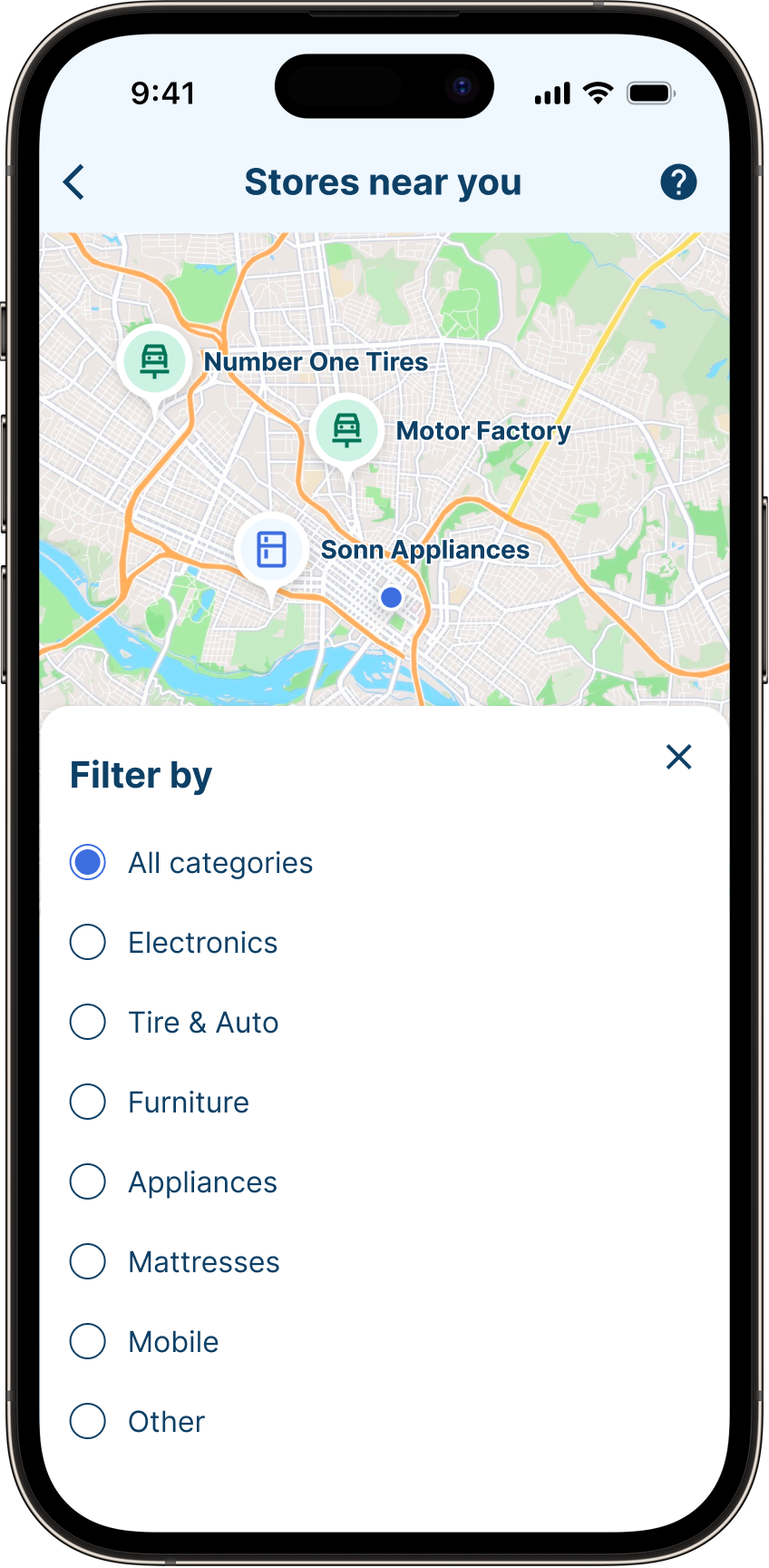
I developed a standardised visual approach using fallback icons for the retail categories: Electronics, Tire & Auto, Appliances, Mattresses, Furniture, Mobile, and Other. This meant stores could be represented consistently even when an official logo was unavailable.
It also reduced the need to source, store and maintain individual logo assets for every participating retailer, avoiding unnecessary asset-management and database complexity as the network grew.







3. Adapt the store locator for native mobile
The existing website used MetaLocator to power its store locator. However, bringing this capability into the native apps required more than adapting the existing interface to a smaller screen.
I worked through the design requirements and technical considerations with the team to explore how the map experience could be delivered effectively in the mobile environment.
Following this design and technical discovery, leadership approved Mapbox as the mapping solution for the iOS and Android apps.
This provided the foundation for a more responsive mobile map experience, with location discovery and interactions designed around the needs of app users.
4. Balancing Customer Needs with Technical Constraints
Before defining the map experience, we analysed the distribution of participating retailers across the US. The data showed that customers had an average of 10 stores within a 35-mile radius of their location nationally.
This provided a useful benchmark for understanding how much choice customers could reasonably expect to see nearby. It helped inform the technical rules behind the map functionality, balancing the need to make relevant physical retailers discoverable with the practical constraints of displaying and retrieving location-based results.
The decision was grounded in the actual distribution of stores across the customer base, rather than applying an arbitrary limit. It helped align the customer experience with what the underlying technology could reliably support.
5. Shop again
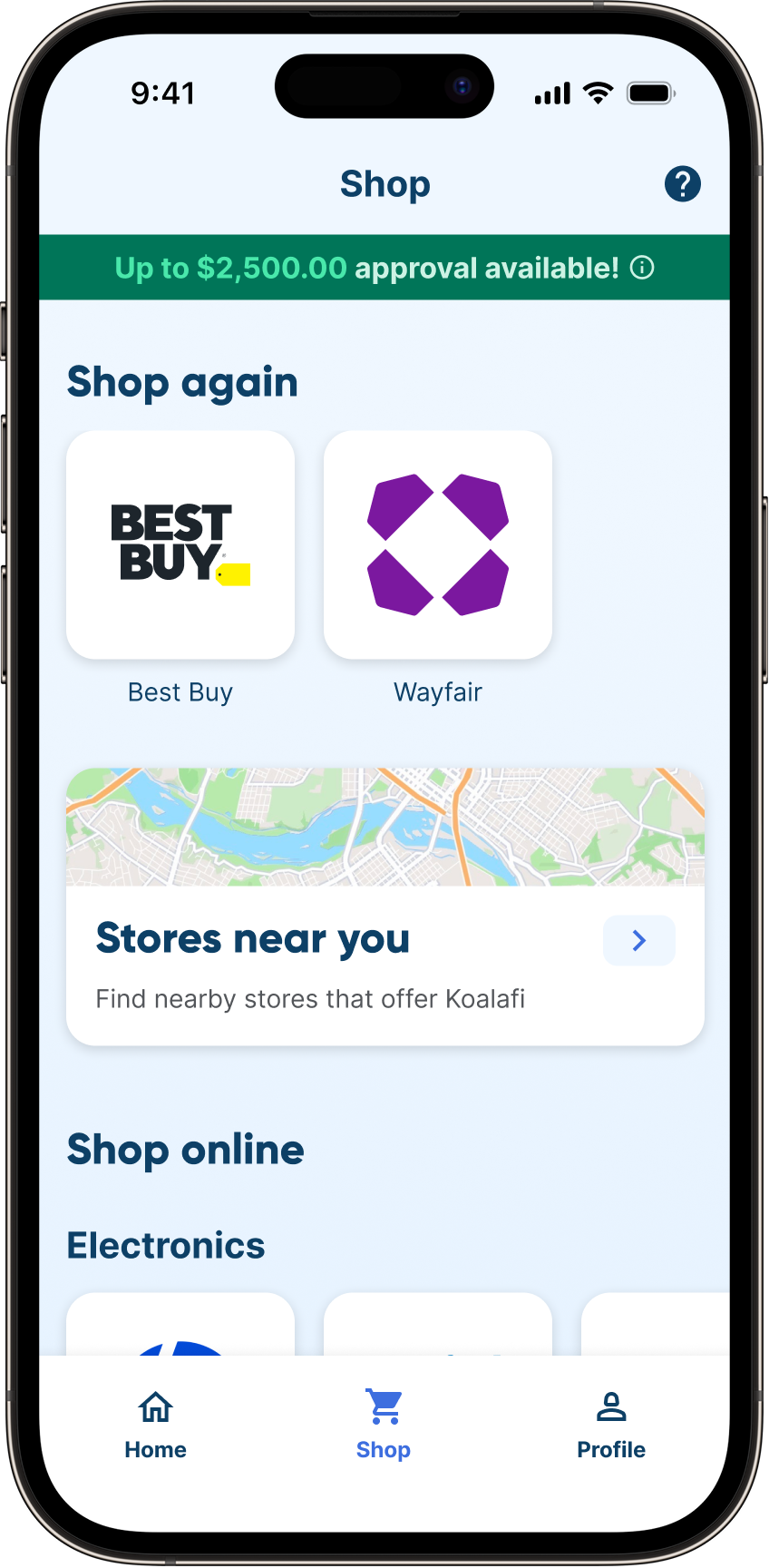
Our data showed that 70% of returning customers return to shop at the same retailer from their first lease. I designed an improvement to make repeat shopping easier by surfacing retailers a customer had previously shopped at near the top of the Shop experience.
Rather than requiring customers to search for a retailer again, Shop Again made familiar destinations easier to find and gave the experience a more relevant starting point.
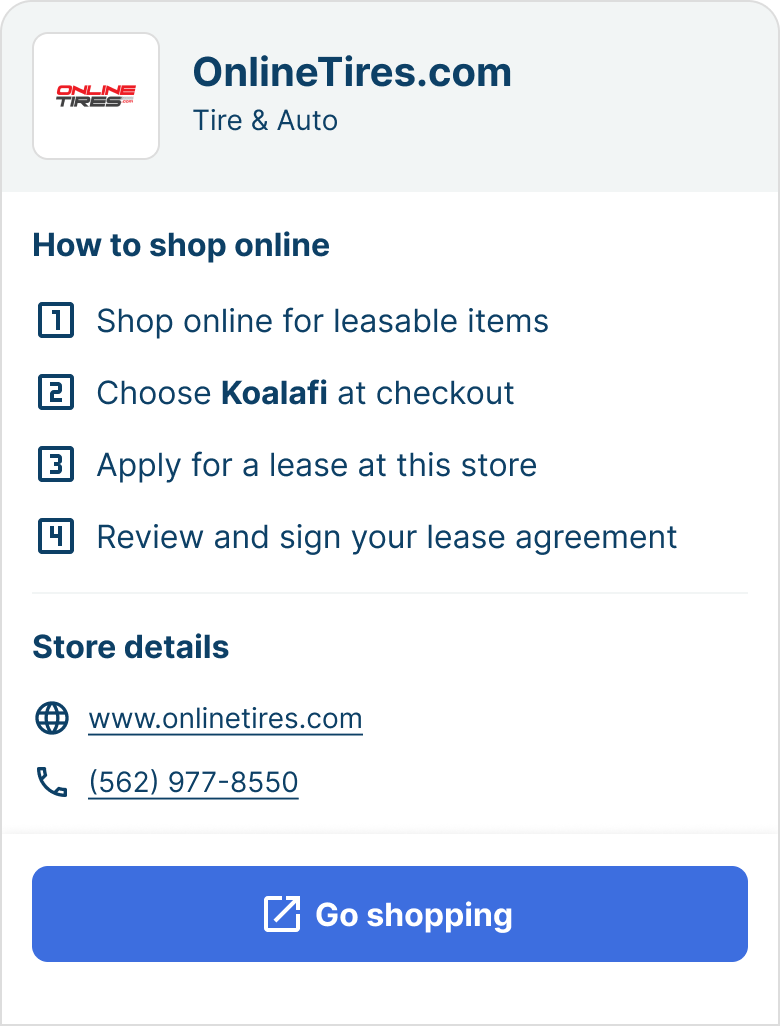
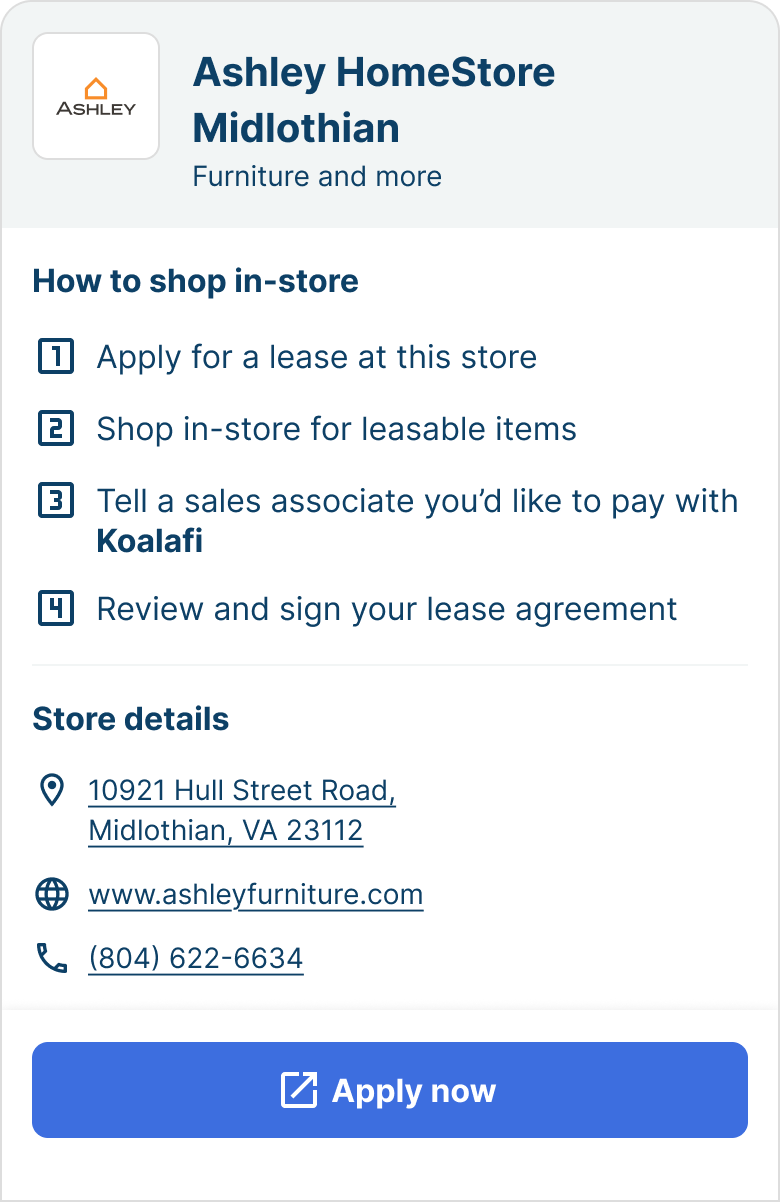
6. Adding contextual shopping guidance
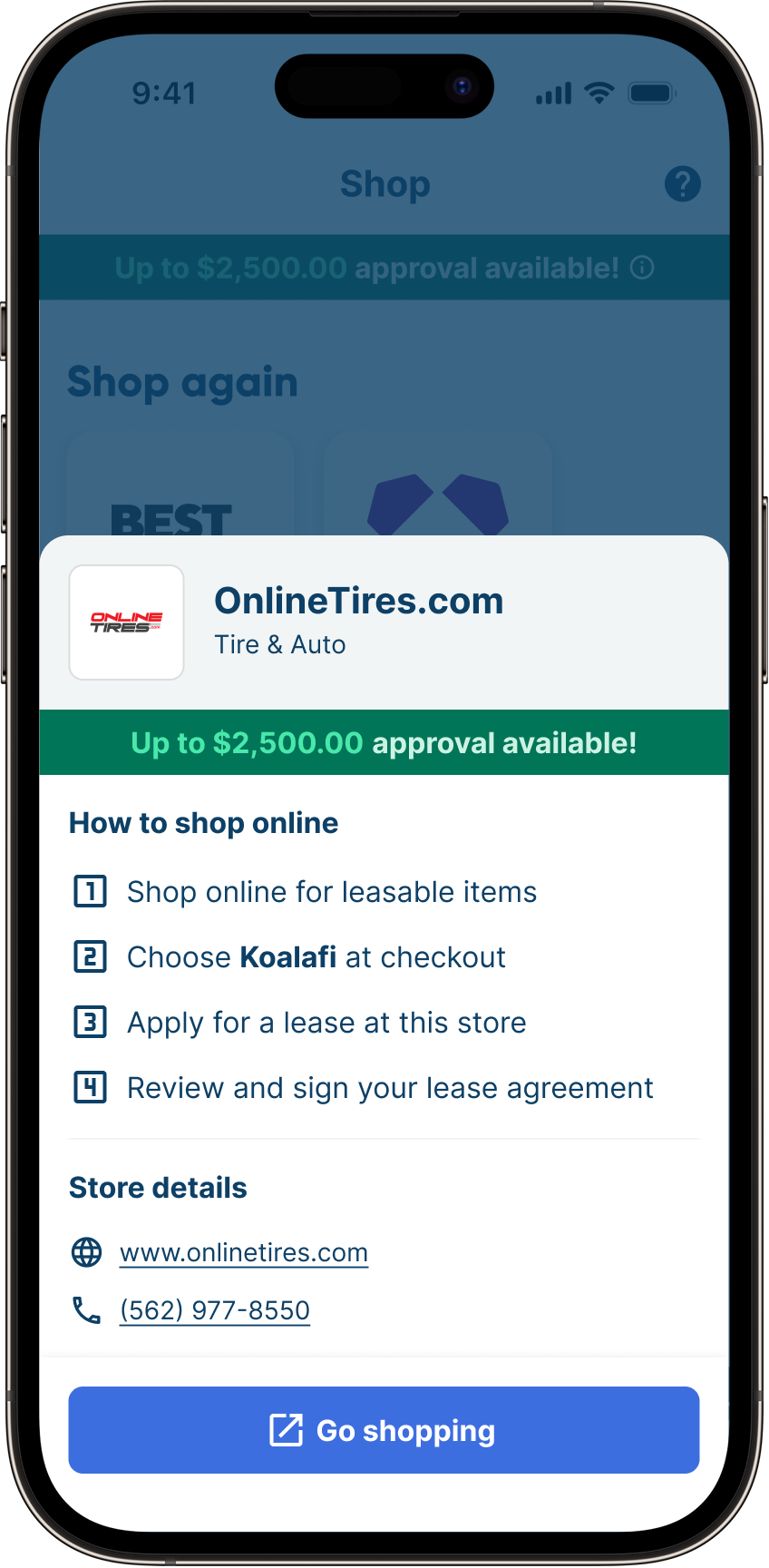
To support customers moving from discovery into shopping, in collaboration with my Design Manager and other stakeholders, I designed instructional bottom-sheets for online and in-store shopping.
These provided clear, step-by-step guidance within the app, helping customers understand what to do next without interrupting their journey or sending them elsewhere for instructions.
Reflections
More than pixels
One of the key learnings was that extending an existing web capability into a native app often requires more than a responsive redesign. The store locator was a good example: understanding the technical requirements, exploring the mapping options and working through the design implications helped shape a better solution for mobile.
Design for the gaps
The retailer identity system was another important part of that thinking. By designing for the full range of retailers from the outset, we avoided relying on assets that wouldn't always be available and created a more scalable approach.
Holistic experience
Together, these improvements helped turn the app from a place to manage a Koalafi lease into a broader customer experience, connecting lease servicing with retailer discovery and shopping.